Have you ever bought a premium tea, recommended by experts, and when you get home and prepare it, the result is a bitter, astringent and disappointing drink?
The first reaction is to blame the quality of the leaves. But most of the time, the “crime” was committed during preparation.
High-quality Chinese tea is delicate. Treating it like a regular sachet tea is like using a reserve wine to make sangria. Today, we will teach you the Gongfu Cha method (making tea with expertise) so that you never waste a good leaf again.
![PLACEHOLDER: Image of a minimalist Gongfu Cha setup: a white porcelain Gaiwan, a glass jar (Chahai) and small cups on a wooden table, with natural light]
1. Water: The Invisible Ingredient
Tea is 99% water. If your water isn’t good, your tea will never be great.
- The Common Mistake: Using tap water. In Portugal, mains water is drinkable, but it often has chlorine or an unbalanced pH. Chlorine “kills” the floral aromas of an Oolong or the sweetness of a Green Tea.
- The Solution: Use filtered water or bottled water with a neutral pH (close to 7.0) and low mineralization (“light water”). Take the test and you will see an immediate difference.
2. The Temperature: Don’t “Burn” the Leaves
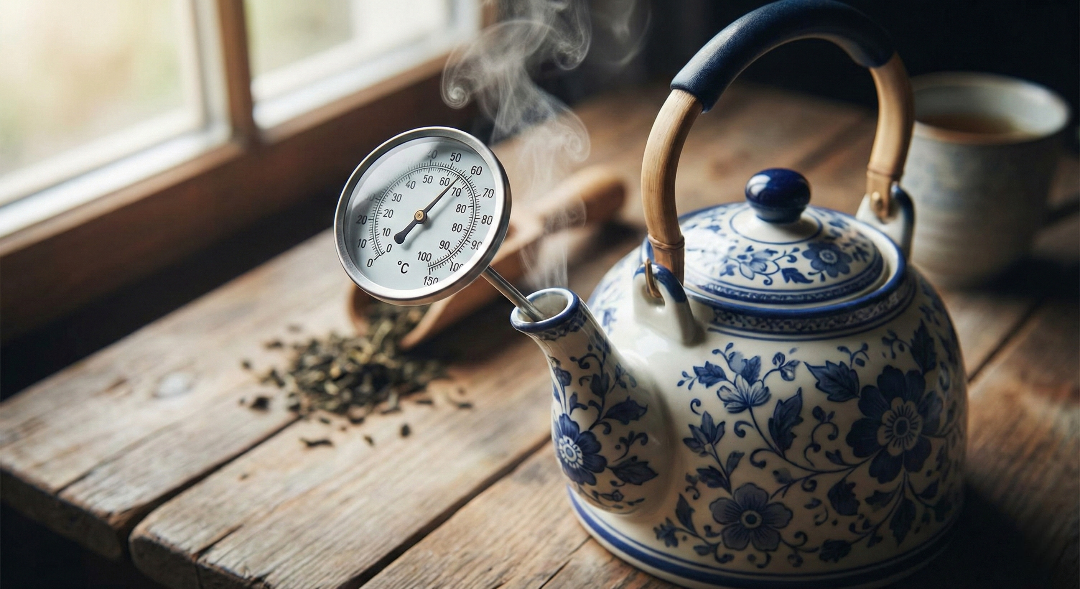
Pouring boiling water (100°C) over any type of tea is a classic mistake. While a robust Pu-erh can handle the heat, a delicate Green Tea will instantly become bitter and “cooked.”
Save this reference table:
| Type of Tea | Ideal Temperature | Why? |
| Green / White Tea | 75°C – 80°C | Preserves sweetness and antioxidants. |
| Oolong (Light oxidation) | 85°C – 90°C | Highlights floral notes without releasing extra tannins. |
| Dark Oolong / Black Tea | 90°C – 95°C | Needs heat to “open” the rolled leaf. |
| Pu-erh (Shu and Sheng) | 95°C – 100°C | Requires maximum temperature to extract the earthy flavor. |
3. The Secret: The “Short Infusions” Method
In the West, we are used to putting a teaspoon in a large 500ml teapot and letting it rest for 5 minutes. In the Chinese method (Gongfu), we do the opposite:
- We use a lot more leaves (high leaf/water ratio).
- We use a small container (100ml to 150ml).
- We make infusions very quickly (10 to 30 seconds).
What’s the advantage? Instead of having a single “heavy” and bitter cup, you get 5, 8 or even 10 infusions from the same leaf. The first reveals the aroma, the second the flavor, the third the body… It’s a journey of flavors that evolves.
4. The Equipment: Gaiwan vs. Yixing Teapot
To practice this method, the large breakfast mug is not suitable. You need the right tools.
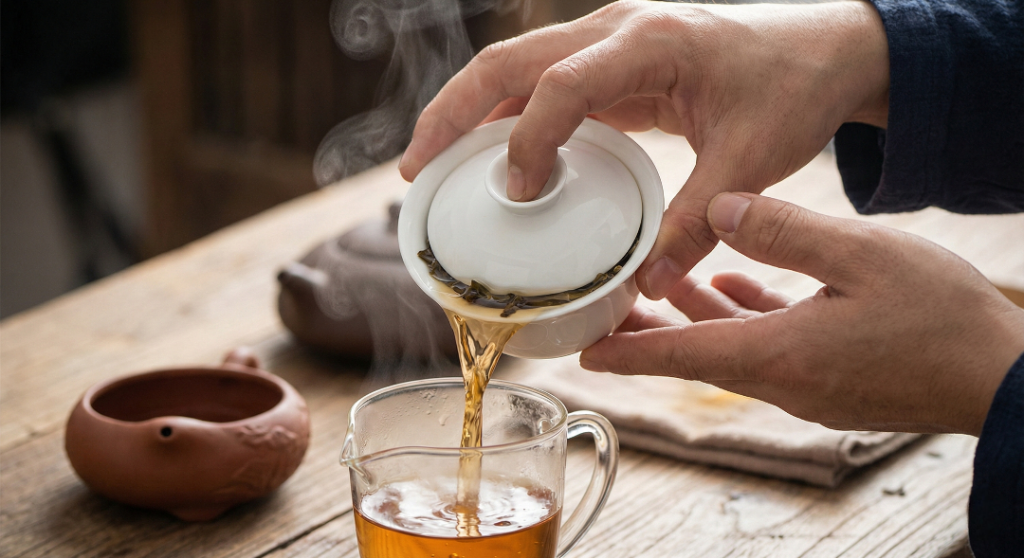
The Gaiwan (The “Lidded Bowl”)
It is the most versatile and honest tool. Generally made of porcelain, it does not absorb flavors.
- What it’s for: Ideal for tasting Green, White and Oolong Teas, as it allows you to smell the lid (where the aroma is concentrated) and see the color of the liquor.
The Yixing Clay Teapot
It’s the jewel in the crown. Made from a special purple clay (Zisha), this teapot is porous.
- The Magic: Over time, the clay absorbs the oils from the tea. An old teapot, used only for Pu-erh, will “round off” and improve the flavor of any tea you put in it. It’s an investment for life.
Conclusion
Preparing tea should not be a mechanical task, but rather a moment of pause and full attention. By controlling water, temperature and time, it transforms dry leaves into an unforgettable sensory experience.
You don’t need to be a master to get started. All you need is curiosity and basic equipment.
Want to take your tea to the next level? Take a look at our collection of porcelain Gaiwans and Authentic Teapots and start your ritual today.