If Green Tea is the freshness of spring and Black Tea is the heat of summer, Oolong is the complexity of autumn.
Often called the “Tea of Perfection” or “Blue Tea”, Oolong is undoubtedly the most fascinating and diverse category in the world of Chinese tea. For the beginner, it may seem confusing: how can the same type of tea have a flavor of fresh orchids and another of toasted wood?
The answer lies in oxidation. Oolong is in the middle: it is partially oxidized. And it is in this spectrum that the magic happens.
The Light Oolongs: Floral Elegance
On the lighter side of the spectrum (low oxidation), we find teas that resemble the freshness of green tea, but with an unmatched floral sweetness.
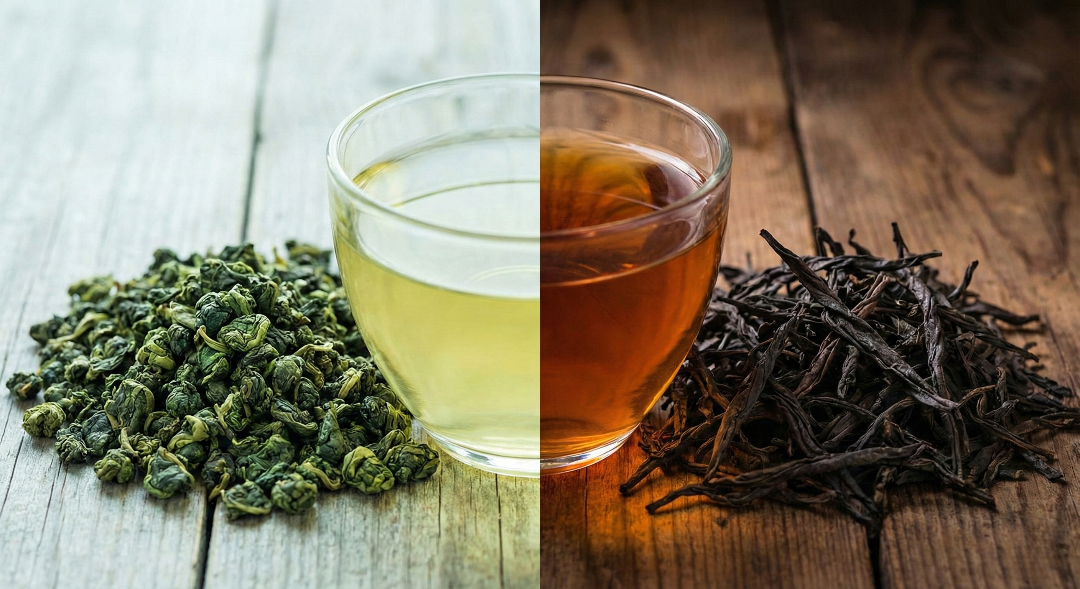
The king of this category is Tie Guan Yin (Iron Goddess of Mercy). When drinking this tea, you don’t taste “grass”, you taste flowers. Its natural aroma is reminiscent of lilacs and orchids. It is a smooth tea, golden yellow in color, perfect for relaxing in the afternoon or for those looking for a delicate drink without bitterness.
The Dark Oolongs: The Strength of the Rock (Yan Cha)
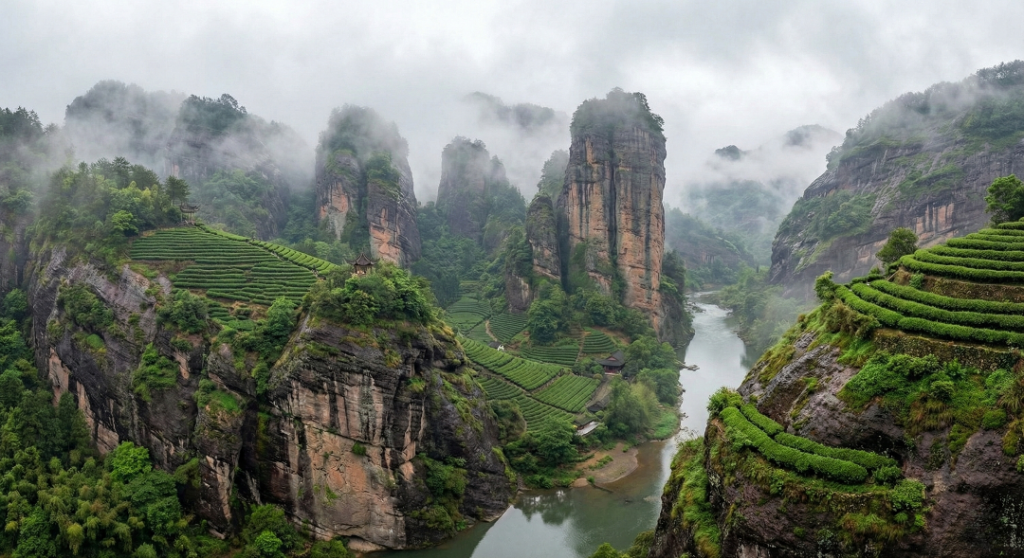
At the other extreme, we have the Oolongs of the Wuyi Mountains, famous for their mineral and roasted character.
Here, the protagonist is the legendary Da Hong Pao (Great Red Robe). Its leaves are dark and twisted. The flavor? It’s the opposite of floral. It is robust, with notes of wood, toasted caramel, spices and a hint of mineral that comes from the rocky soil where it grows. It is a tea with a “strong personality”, often described as masculine and invigorating.
The Truth About “Milky Oolong”
You’ve probably heard of (or tasted) the famous Milky Oolong, known for its intense aroma of milk or cream. It’s a bestseller in Portugal.
But here at Boloarte, we value honesty. There are two types of Milky Oolong:
- The Natural (Jin Xuan): A rare variety that has a creamy texture and a light natural dairy aftertaste.
- The Flavored: Most of what you find on the market. It is Oolong tea to which natural milk flavors are added during drying.
There’s no harm in liking flavored food (it’s delicious and comforting!), as long as you know what you’re buying. In our store, we offer a high quality version, where the aroma complements the tea, without masking it.
Benefits: The Beauty Tea
In Asia, Oolong is not just drunk for its flavor. It is known as the “tea of beauty”.
- Healthy Skin: It is rich in polyphenols that fight free radicals, helping to keep the skin young (reducing signs of aging and skin allergies).
- Relaxation: Contains L-theanine, which promotes muscular and mental relaxation, ideal for decompressing after a day of work.
Conclusion
The world of Oolongs is vast. You could spend years exploring the nuances between a Taiwanese Oolong and a Mainland Chinese Oolong.
Not sure if you prefer the floral side or the toasty side? No need to choose blindly.
Discover your flavor profile. We created the “Harmony Oolong” Tasting Set, which includes samples of our 3 main Oolongs (Tie Guan Yin, Da Hong Pao and Milky Oolong).